- -€13.42
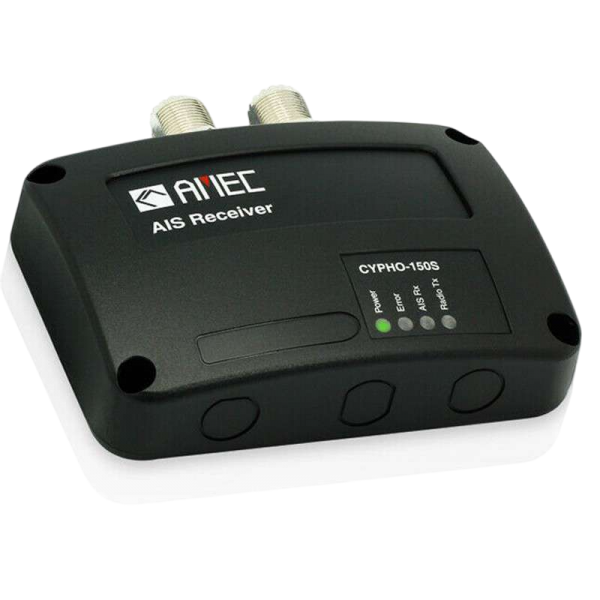
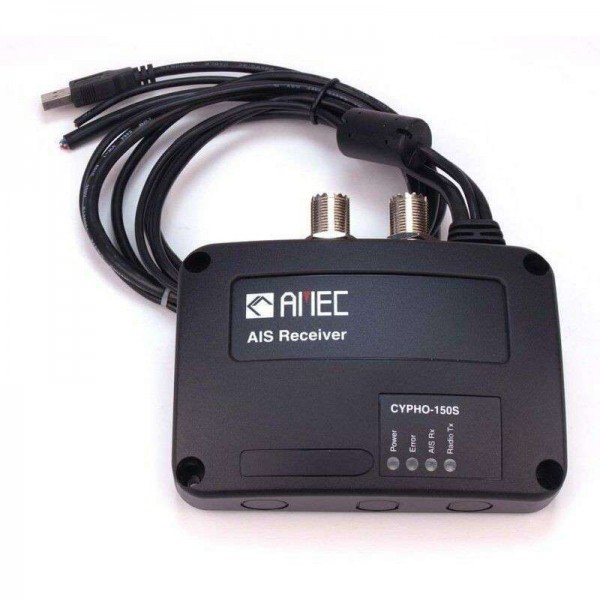
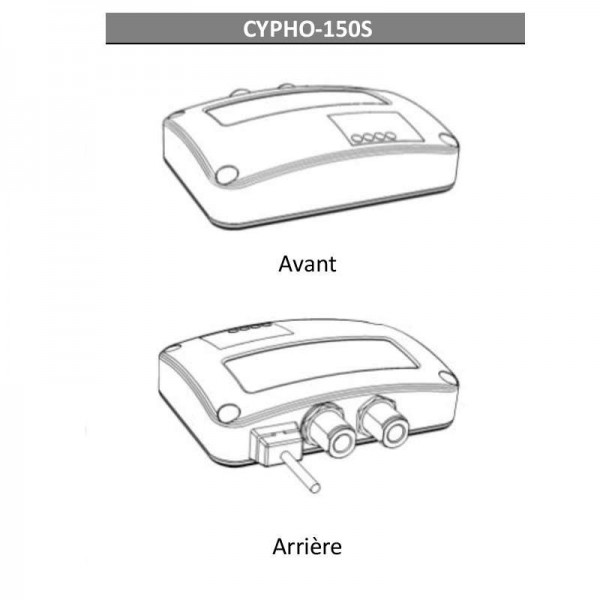
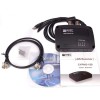
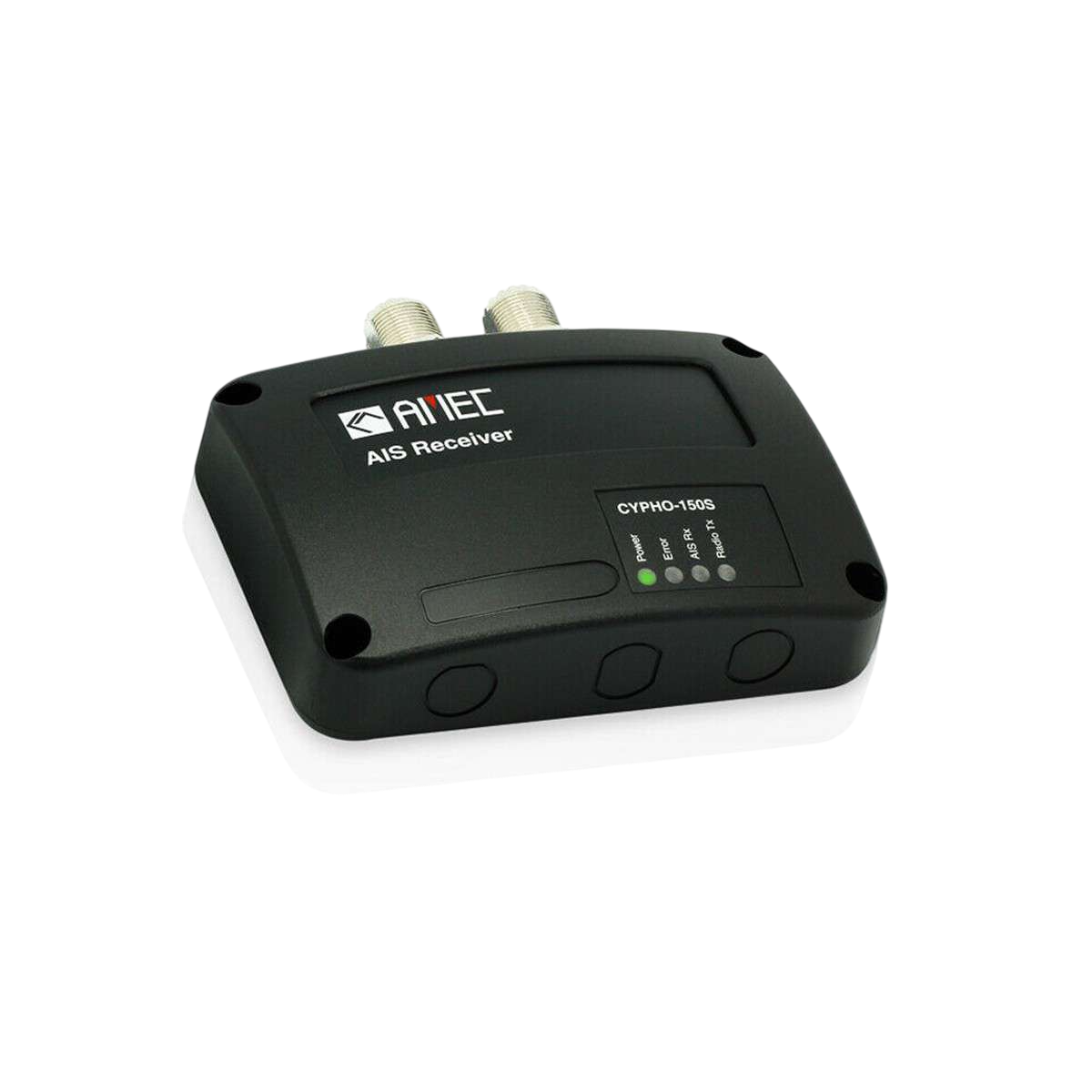
CYPHO-150S AIS receiver
Ref.
MCT-AMEC-150S
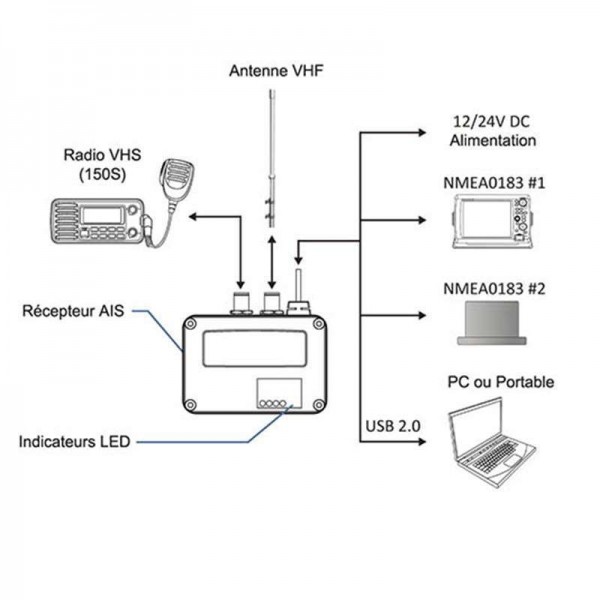
The AMEC CYPHO-150S is an AIS receiver equipped with a VHF Splitter allowing the use of a single VHF antenna and thus combining AIS and VHF.
MCT-AMEC-150S
Data sheet
- Product type
- AIS
- Functionality
- AIS receiver, NMEA 0183, Integrated VHF splitter
AMEC - RECEIVER AIS CYPHO-150S - AN INTEGRATED SPLITTER
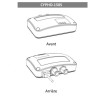
The AMEC CYPHO-150S is a AIS receiver with an integrated VHF splitter . It receives navigation data AIS from transponder-equipped vessels, enhancing navigation safety. It is designed to interoperate with Class A or Class B transponders, and any other AIS station operating on the VHF data transmission link AIS.
|
|
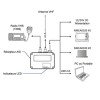
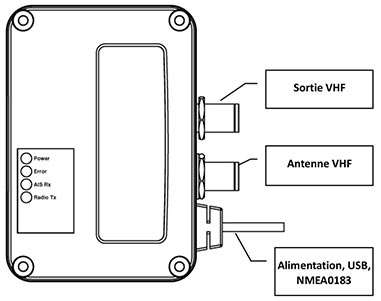
AN INTEGRATED SPLITTERThe CYPHO-150 series is designed with two parallel AIS receivers and optimized sensitivity. With the AIS CYPHO-150S receiver on board, you can monitor the status of vessels equipped with AIS transponders within reception range, receiving their dynamic information (position, speed, SOG, etc.), static information (vessel name, MMSI, call sign, etc.), and relative information (cargo type, destination, etc.) Equipped with USB2.0 and NMEA 0183, the CYPHO-150S series enables connectivity to most peripherals available on the market. The CYPHO-150S and its integrated VHF splitter allow the use of a single VHF antenna and to combineAIS and VHF. |
MAIN FEATURES :
|
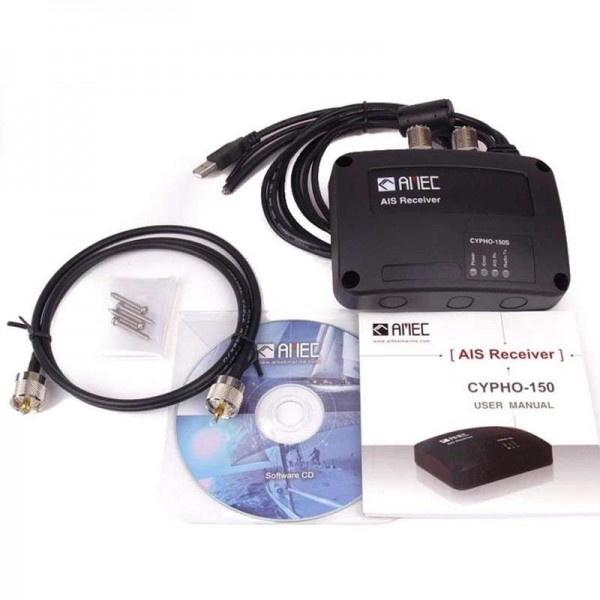
BOX CONTENTS :
|
Customer Reviews (0)
No customer reviews for the moment.
Sign in to leave a review
Questions / Answers (1)
I would like to receive the AIS positions on my IPAD tablet with the Navionics application. What exactly do I need-as a receiver and the equipment to install it on my sailboat.
olagnier alain, the 18/06/2024
Hello,
The Navionics application must be able to connect to a AIS receiver with Wi-Fi function. List of AIS Wifi here
OnceAIS is installed,
- Connect your tablet to the Wi-Fi network broadcasting the AIS targets.
- Go to-in Menu => Connect Instrument => Open Wi-Fi settings to connectAIS to Navionics.
- Your tablet will send you to Wi-Fi Settings, where you should find a Wi-Fi network in the name of your receiver AIS.
⚠️ Note: you don't need an Internet connection to view AIS targets!
Data passes directly over a local network between the AIS receiver and the tablet/smartphone.
Comptoir Nautique Team