- -€14.90
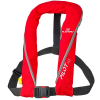
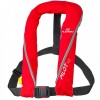
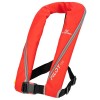
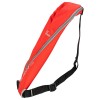
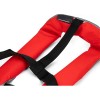
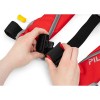
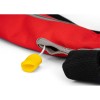
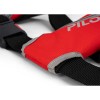
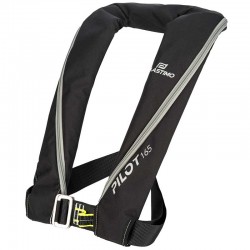
Pilot 165 lifejacket - Without harness
Ref.
66781
1 reviews
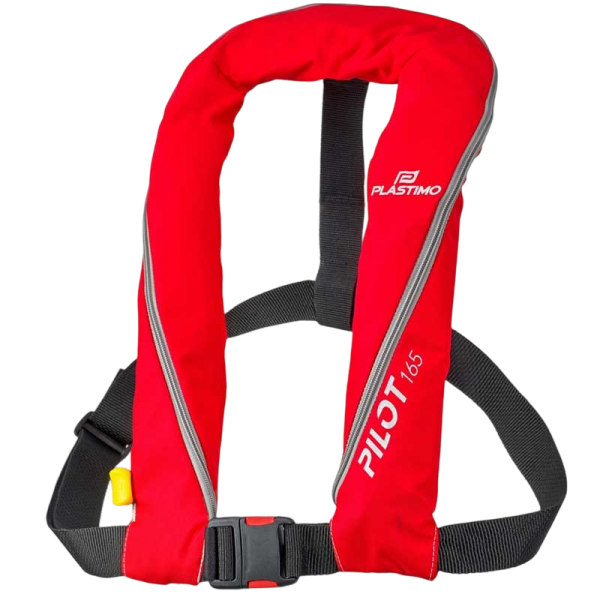
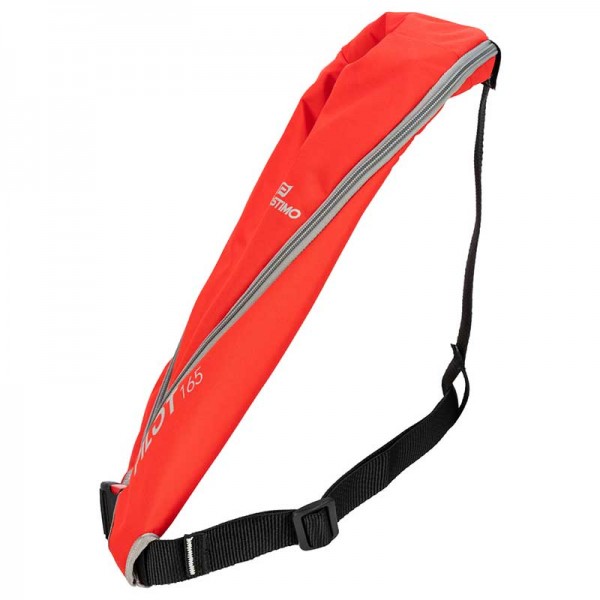
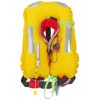
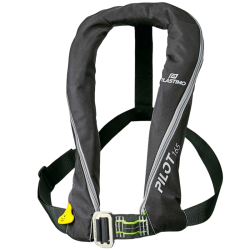
The Plastimo Pilot 165 harnessless inflatable lifejacket has been designed to offer comfort, lightness and freedom of movement when out at sea.
Approved in category 150N, with a true buoyancy of 165N, it is ideal for sailors looking for a simple, ergonomic and reliable lifejacket, for both coastal sailing and cruising.
Available with manual, automatic or Hammar hydrostatic release, it lets you choose the version best suited to your needs, without the need for an integrated harness.
66781
Data sheet
- new
- ☣️ Hazardous materials
- Product type
- Life jackets
- Trigger
- Manuel, Automatic, Hammar
- Buoyancy (in Newtons)
- 150, 165
- Sizes
- Adults
- Equipped with harness
- Without harness
PLASTIMO - PILOT 165 HARNESSLESS LIFEJACKET - COMFORT AND SIMPLICITY WHEN BOATING
The Pilot 165 harnessless lifejacket is designed for boaters looking for a simple, comfortable and effective inflatable lifejacket, without the need for an integrated harness.
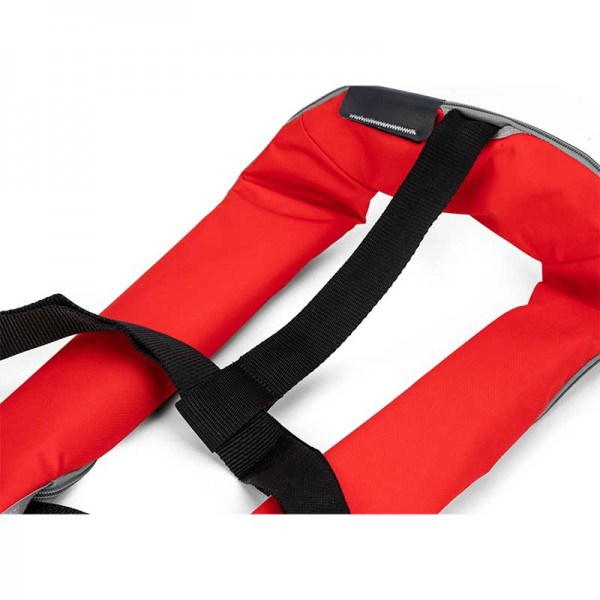
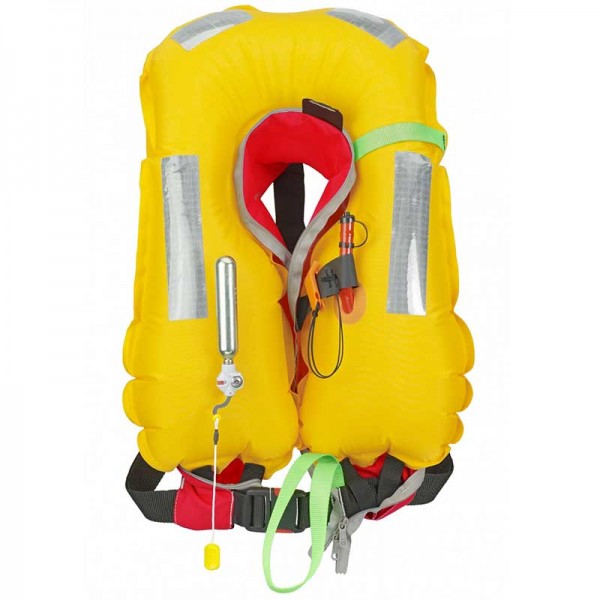
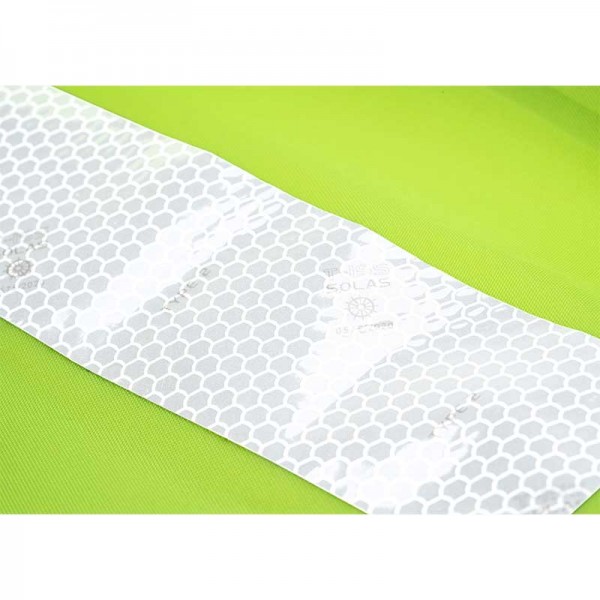
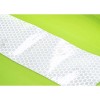
This version retains the strong points of the Pilot 165 range: a true buoyancy of 165N, ergonomic design and a fluorescent yellow inner tube with reflective stripes to make it easier to spot someone who has fallen overboard.
Depending on your practice, you can choose between three release systems : manual, automatic or hydrostatic Hammar. Each version meets a different need, depending on your requirements and your sailing conditions.
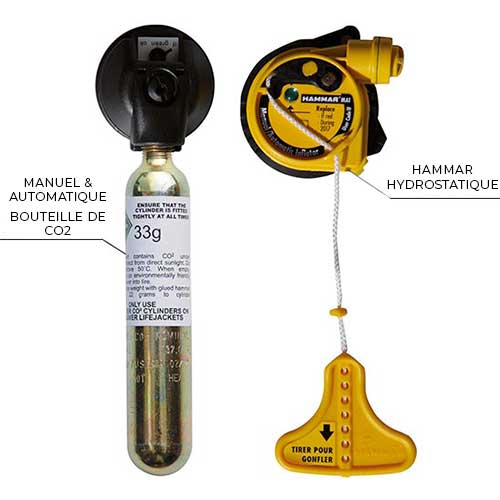 |
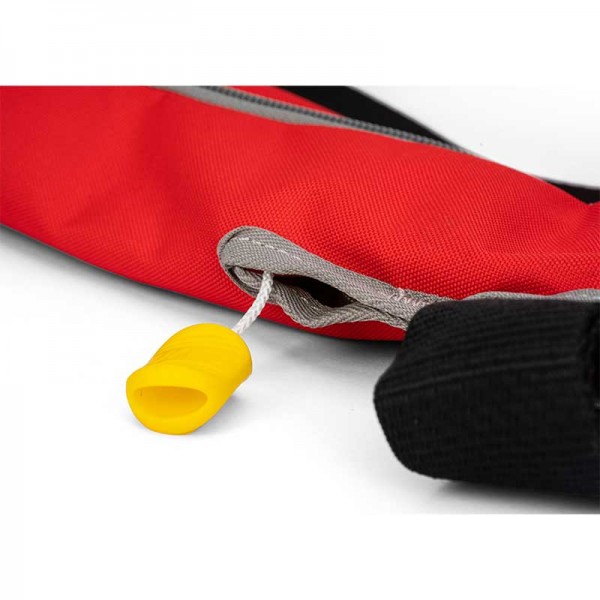
WHICH RELEASE SYSTEM?The harnessless Pilot 165 is available with three release systems: manual, automatic or Hammar hydrostatic. The right choice depends above all on your riding style and the conditions in which you sail. The manual release is activated voluntarily by the user in the event of a fall into the water. A punch then strikes the CO2 cylinder to inflate the vest. This is a simple and effective solution, but requires the user to be conscious and able to act. The automatic trigger, also known as the pellet trigger, operates by means of a soluble element that dissolves after immersion. This releases the percussion mechanism, allowing the vest to be inflated. This system provides additional safety, but requires monitoring of the trigger's expiration date. The Hammar hydrostatic release operates under the effect of water pressure, from around 10 cm below the surface. It limits involuntary tripping due to spray or heavy splashing, making it particularly suitable for more exposed sailing. Regardless of the model chosen, all inflatable vests can also be triggered manually. |
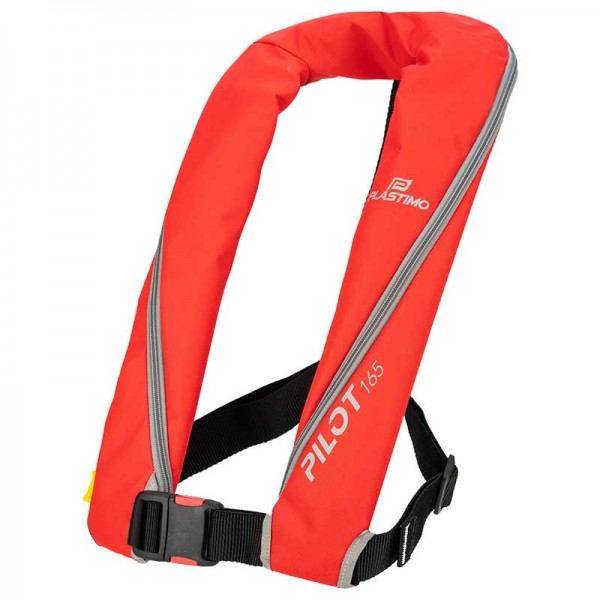
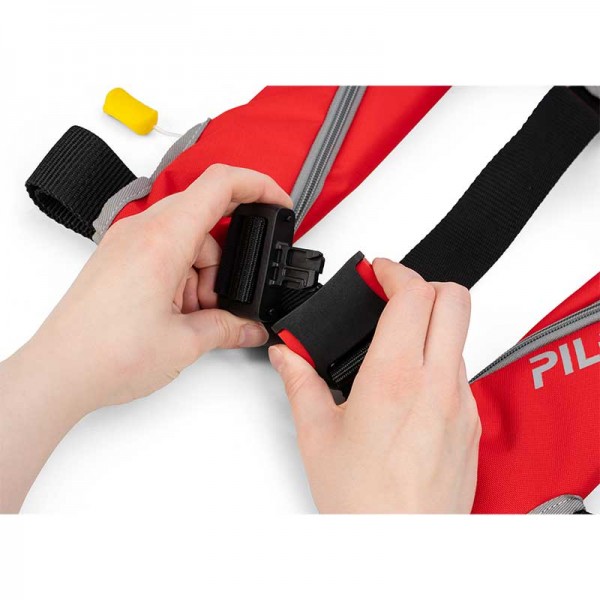
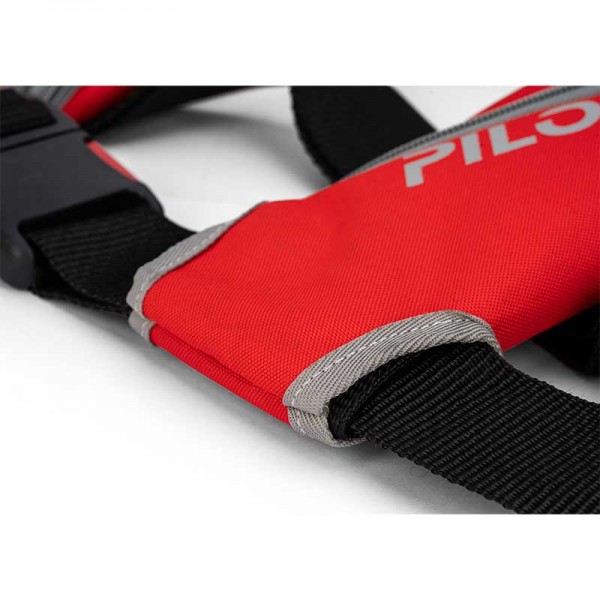
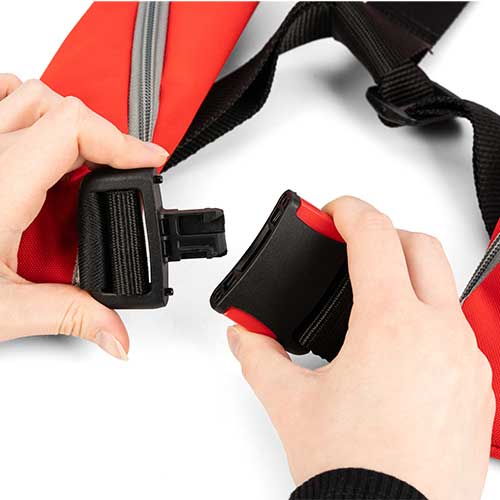
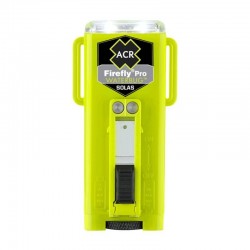
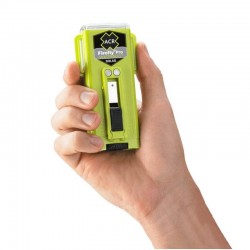
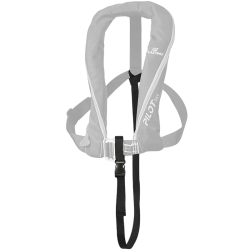
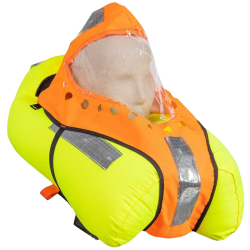
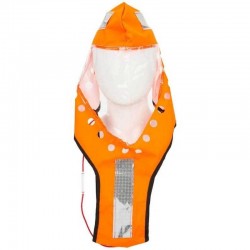
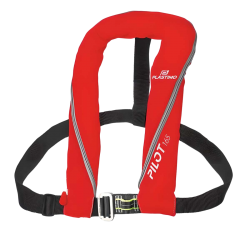
CONSTRUCTION OF THE PILOT 165The harness-free Pilot 165 has been redesigned to offer a more comfortable, natural fit for everyday use. Its light, supple fabric cover allows great freedom of movement, both when maneuvering and sailing. Its cut has been optimized to provide greater freedom of movement for the arms and rest more naturally on the shoulders, enhancing comfort even during prolonged wear. The adjustable side straps make it easy to adjust to your body shape. The inner tube is protected inside the cover, and the double-opening YKK closure facilitates inspection and reconditioning operations. In this harness-free version, the Pilot 165 is simpler and more straightforward to use. It closes with an easy-to-handle, double-safety belt-type buckle. If you're looking for a version equipped for lanyard use, there's also a Pilot 165 with harness. You can complete your equipment with a range of accessories, such as a -skin strap, a storage bag, a -spray mask or a LED survival light (sold separately). |
 |
WITH OR WITHOUT HARNESS: WHICH PILOT 165 TO CHOOSE?
|
Pilot 165 without harness |
Pilot 165 with harness | |
|---|---|---|
| Design | Simple, streamlined version | Integrated harness version |
| Closure | Double safety buckle | Buckle with integrated harness |
| Recommended use | Pleasure boating, regular outings, cruising | Sailing with the need to tie up on board |
| Lanyard compatibility | ❌ | ✅ |
| Available triggers | Manual, automatic, Hammar | Manual, automatic, Hammar |
| True buoyancy | 165N | 165N |
MAIN POINTS :
|
BOX CONTENTS :
|
Accessories



Questions / Answers (10)
Hello, I am in Martinique and I would like to know if it is possible to deliver the automatic life jacket?
José F., the 02/07/2024
Hello José, unfortunately airline regulations prohibit the transport of gas cartridges, which this model is equipped with. Whether it has a manual, Hammar or automatic release.
We recommend that you opt for a lifejacket without release.
Comptoir Nautique Team
Hello, is-this model equipped with a strap passing between the legs?
René T., the 02/07/2024
Hi René, this lifejacket does not have a subcutaneous-strap. You need to opt for the compatible under-skin strap sold separately.
Comptoir Nautique Team
I wanted to know if this vest was exclusively for adults?
Yann, the 27/03/2025
Hi Yann, this vest is designed for people weighing at least 40 kg. If you put it on a child, it won't be adapted to their morphology. If you want a vest for children, choose one specifically adapted to their height and weight.
Comptoir Nautique Team
How do I care for my inflatable lifejacket Plastimo?
Samuel, the 27/03/2025
Hello Samuel, maintaining your lifejacket is essential to prolong its life and ensure its effectiveness.
- First of all, visually check your lifejacket before each outing (outer cover, C02 cartridge, fastener, strap, release system, etc.).
- Have it checked by a professional every year.
- Store it in a well-ventilated, dry place.
- If your vest has been used and triggered, remember to buy spare parts adapted to your vest and its triggering system.
Comptoir Nautique Team
What's the difference between harnessed and non-harnessed models?
Yoann, the 05/06/2025
Hello Yoann, the Pilot 165 lifejacket comes in two models: with and without harness.
- The harness model includes a textile loop or "D" ring for attaching a safety lanyard. This feature is essential when sailing offshore, at night or in rough seas, where it's crucial to remain attached to the boat to prevent falling overboard
- The harnessless model does not allow attachment to a safety lanyard. It is designed to be lighter and more comfortable, making it ideal for nautical activities where attachment to the boat is not necessary, such as coastal sailing or pleasure outings
Comptoir Nautique Team
Quelle différence entre un déclenchement manuel, automatique et Hammar hydrostatique ?
Jean-Marc, the 10/04/2026
Le déclenchement manuel doit être actionné par l'utilisateur. Le déclenchement automatique se gonfle après immersion grâce à une pastille soluble. Le système Hammar hydrostatique se déclenche sous l'effet de la pression de l'eau, ce qui limite les déclenchements involontaires liés aux embruns ou aux projections.
Comptoir Nautique Team
Quel système de déclenchement choisir pour le gilet Plastimo Pilot 165 ?
Gladys, the 10/04/2026
- Le modèle manuel convient à ceux qui recherchent une solution simple et économique.
- Le modèle automatique est adapté à une pratique régulière en plaisance.
- Le modèle Hammar hydrostatique est particulièrement intéressant pour les navigations exposées ou lorsque l'on souhaite limiter les déclenchements intempestifs.
Comptoir Nautique Team
À qui s'adresse le gilet de sauvetage Plastimo Pilot 165 sans harnais ?
Jérôme, the 10/04/2026
Le Plastimo Pilot 165 sans harnais convient aux plaisanciers qui recherchent un gilet gonflable simple, confortable et léger à porter, pour des sorties régulières, des navigations côtières ou des croisières, sans besoin de harnais intégré.
Comptoir Nautique Team
Pourquoi choisir le Plastimo Pilot 165 sans harnais ?
Antho, the 10/04/2026
Cette version s'adresse à ceux qui souhaitent aller à l'essentiel avec un gilet ergonomique, fiable et facile à utiliser. Elle conserve les performances du Pilot 165, tout en proposant une conception plus simple que la version avec harnais.
Comptoir Nautique Team
Quels accessoires peut-on ajouter au Plastimo Pilot 165 sans harnais ?
Charlotte, the 10/04/2026
Vous pouvez compléter votre équipement avec une sangle sous-cutale, une housse de rangement, un masque de protection anti-embruns ou une lampe LED de survie, selon vos besoins. Ces accessoires sont vendus séparément.
Comptoir Nautique Team